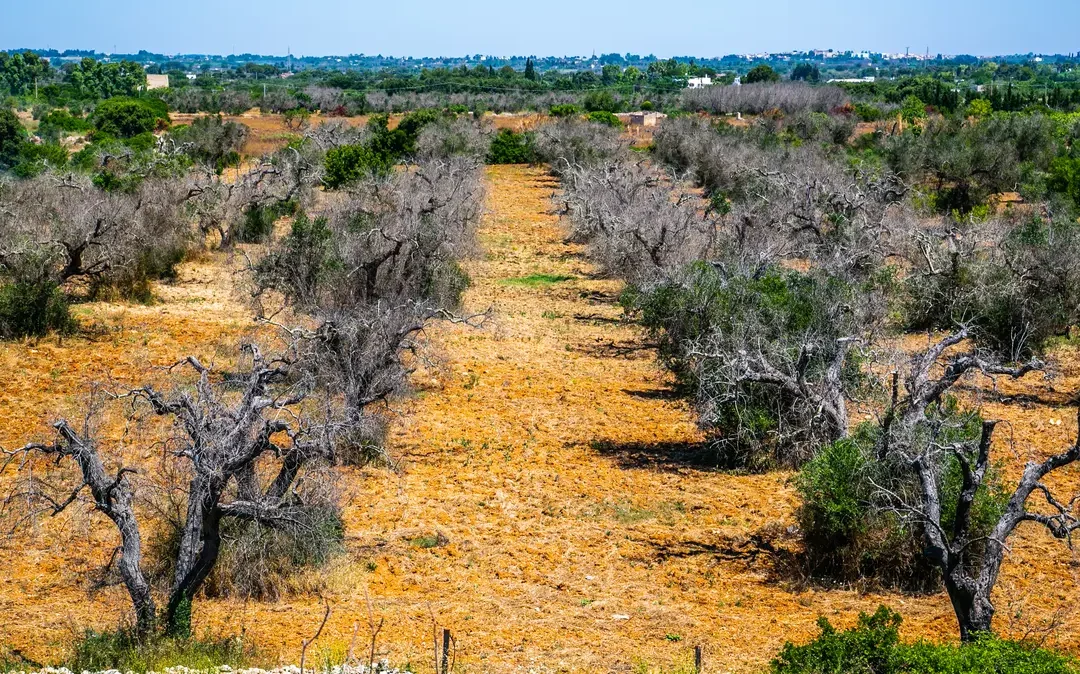

The influential Italian news website Il Post published a long article on the current situation of the Xylella fastidiosaoutbreaks in Apulia. While the epidemic continues to spread in the northern part of the Region, threatening bordering territories, in Salento, where it all started in 2013, some olive trees heavily damaged by the bacterium have started producing again. For the researchers interviewed by the journal, this resilience could be due to a reduction in the insect vector population, the spittlebug (Philaenus spumarius), which is not yet fully explained.
Donato Boscia, CNR researcher and part of the team that isolated Xylella in 2013, told Il Post that this decline “depends on many factors and cannot be quantified because there are no detailed studies on the subject, but it can be observed empirically”. A lower density of insects “means fewer cases of ‘superinfection’, i.e., re-inoculation of the bacterium in the same plant, thus preventing the development of new symptoms and increasing the chances of recovery, especially in olive trees managed with good agronomic practices,” he said.
Another idea is that the damage caused by Xylella in Salento has meant fewer bugs per area that can carry the disease.