
Xylella, from emergency to management
Integrated Management Strategies for Mitigating Xylella fastidiosa impact in Europe

In a nutshell
The bacterium Xylella fastidiosa is one of the most threatening plant pathogens in the world.
The BeXyl Project gathers the top worldwide scientists and stakeholders to find new strategies to mitigate the impact of the Xylella fastidiosa outbreaks in the EU

A worldwide project
31 partners from 14 countries and a stakeholder’s board with more than 40 government agencies, NGOs, nurseries, and farmer’s associations

The Goal
creating a community of scientists, citizens, and end-users, such as farmers to policymakers, to shorten the distance between research and on-field applications

The methodology
a multidisciplinary approach to fill the knowledge gaps on Xf and develop practical solutions to manage the outbreaks
Latest Updates
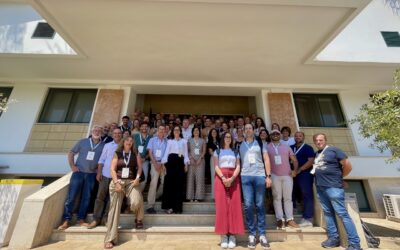
BeXyl – Beyond Xylella: main results – Annex
Context Since its first detection in Europe in 2013, the plant pathogen Xylella fastidiosa (Xf) has continued to be detected in several Mediterranean regions, raising concerns about its long-term environmental and...
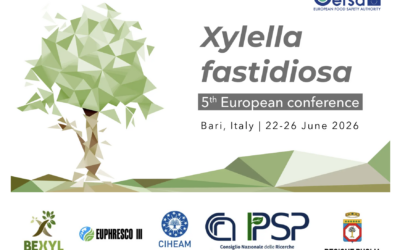
Final BeXyl assembly countdown
The 5th EFSA conference on Xylella fastidiosa, taking place 22-26 June in Bari, Italy, will provide the platform for the final presentation and discussion of the BeXyl Project’s results. In particular, the conference...
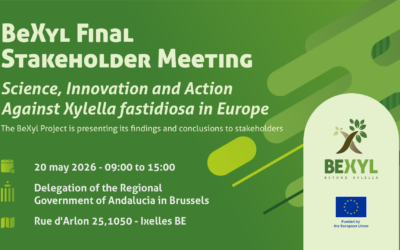
BeXyl meets stakeholders in Brussels
BeXyl project provides new tools and strategies for prevention, monitoring and control of Xylella fastidiosa in Europe The news: In a meeting with policymakers, farmers, and representatives of plant...
Latest Outcomes
Practice Abstracts
Practice Abstract 2
Practice Abstract 2 - Extended
Practice Abstract 1
Practice Abstract 1 - Extended
Practice Abstract 3
Practice Abstract 3 - Extended
Practice Abstract 4
Practice Abstract 4 - Extended
Practice Abstract 5
Practice Abstract 7
Help us grow our community
follow us

In line with the EU Plant Health Law, BeXyl aims to strengthen the two pillars of plant protection – prevention and control – while addressing the socio-economic impacts through dedicated research at both regional and farm levels.


COORDINATOR
CONSEJO SUPERIOR DE INVESTIGACIONES CIENTIFICAS
Instituto de Agricultura Sostenible
Av/ Menendez Pidal s/n
14004 Córdoba (Spain)
