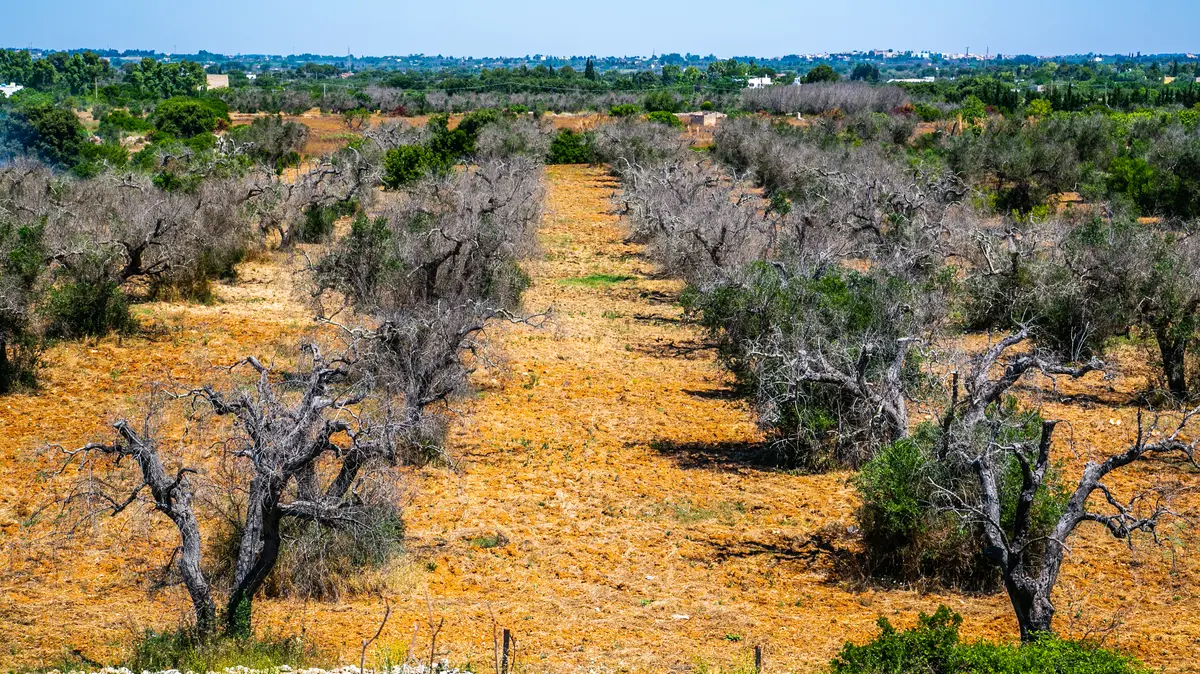
The European Food Safety Authority (EFSA) has launched a public consultation on two draft scientific opinions on the management of Xylella fastidiosa in the EU. The aim of the European Food Safety Authority is to provide evidence to strengthen the scientific basis for future decision-making on EU outbreak management, said Antonio Vicent Civera, Chair of EFSA’s Plant Health Panel.
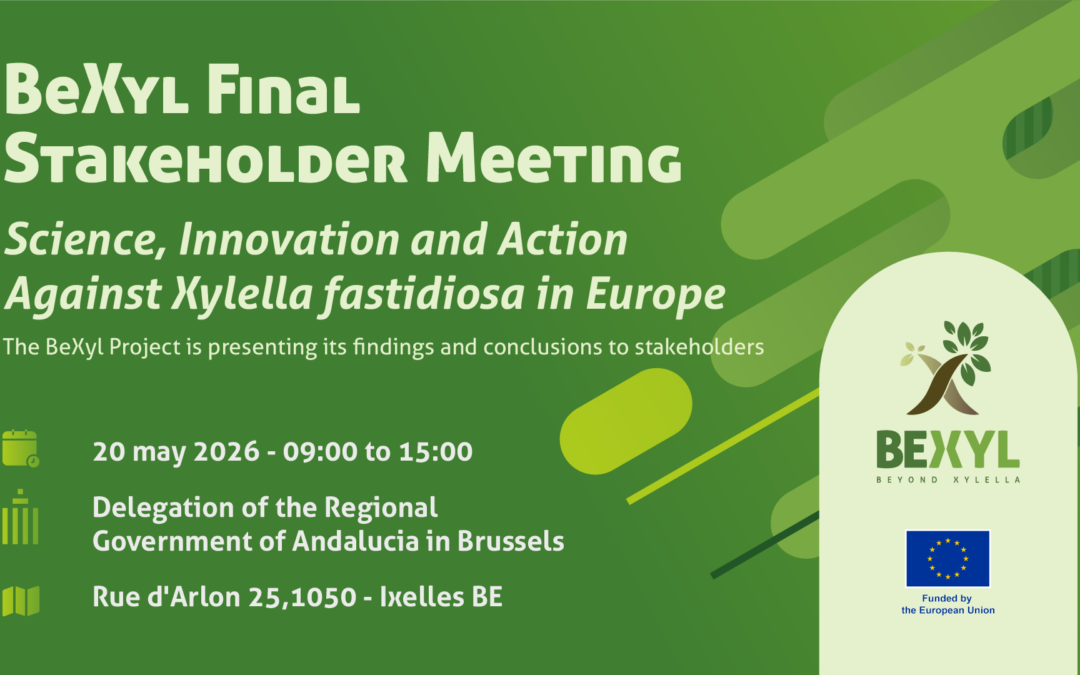
The first draft opinion focuses on vector control measures, while the second draft opinion evaluates in planta solutions and other risk-reduction options for managing the pathogen. Many members of the BeXyl project have actively participated in drafting both scientific opinions.
The results of a meta-analysis conducted on vector control measures show that synthetic pesticides approved in the European Union are currently the most reliable at reducing the survival of vectors. Although other categories such as entomopathogenic fungi and non-synthetic substances have shown promising, its efficacy to reduce vector survival is more uncertain.
The second opinion studied the efficacy of many biological products, natural (non-synthetic) substances, and different field management practices to understand how well they can reduce disease symptoms or lower the number of Xylella fastidiosa cells in infected plants.
The opinion points out several gaps and methodological limitations in the current scientific literature. For example, only a limited number of studies have been conducted under large-scale field conditions. Moreover, experimental designs are often heterogeneous and sometimes lack appropriate controls or sufficient replication, and there is limited information on how treatments may affect bacterial populations within the plant and their potential impact on pathogen transmission.
In this context, BeXyl project coordinator Blanca Landa addressed that, although no curative solution currently exists to eliminate Xylella fastidiosa for infected plants under field conditions, some approaches may still help reduce symptom severity or mitigate disease impact. Continued research, including the work carried out within the BeXyl project, will contribute to strengthening the scientific evidence base needed to better understand these options and to support the development of more effective integrated management strategies for Xylella fastidiosa in Europe.