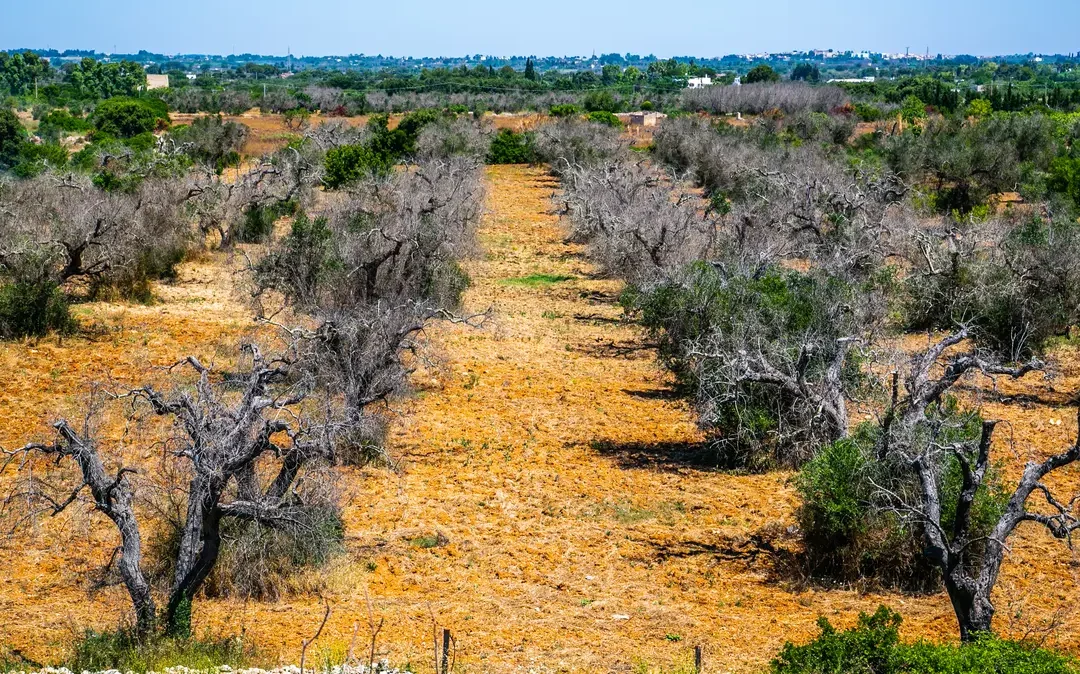

The European Commission proposed an update of the rules to prevent the introduction and the spread of Xylella fastidiosa in Europe. The new provisions include relaxing specific requirements for monitoring and replanting in the “containment zones,” where eradicating the pathogen is no longer possible.
The text, open for consultation and comments until 29 July, outlines that – in these zones – it is “appropriate” to reduce from 5 km to 2 km the area where annual surveys for the presence of the pathogen are mandatory (adjacent to the buffer zone). In the same territories, the Commission also intends to facilitate the movement of plants and replanting.
The new regulation updates the set of molecular tests to identify the subspecies of X. fastidiosa. It adds the recent outbreaks in Portugal to the list of the infected zones in the EU territory. Finally, the Commission also propose to extend the list of plant species to be monitored as they pose “the highest risk” of spreading X. fastidiosa.
In particular, certain subspecies of lavender (Lavandula angustifolia, Lavandula x intermedia, Lavandula latifolia, Lavandula stoechas) and rosemary (Salvia rosmarinus) will be added to the list, as they “have proven to be recurrently infected” and “provide an easy pathway for the spread of the pest within the Union territory,” the document reads.