
In the summer of 2016, researchers found Xylella fastidiosa in Israel. What is the situation today? We talked to Ofir Bahar researcher at the Department of Plant Pathology and Weed Research, Agricultural Research Organization – Volcani Institute (ARO-VOL). In the BeXyl Project, Ofir Bahar is the leader of Work Package 4 on host plant resistance to Xylella fastidiosa.
Testing plants for Xf in Israel: how did it come to mind?
For many years, almond field advisors were concerned about several symptoms they could not attribute to any known disease agents in Israel at the time. Then, in the summer of 2016, a delegation of the Plant Protection and Inspection Services (PPIS), i.e, the Israeli national plant protection organization, scientists, almond field advisors and growers visited the fields. Some of the samples collected by the PPIS were positive for Xylella fastidiosa.
What are the subspecies and the hosts?
Currently, the only subspecies we have found is Xylella fastidiosa subspecies fastidiosa, Sequence Type 1, on infected almonds, grapevines, and some wild vegetation like Judas tree (Cercis siliquastrum).
What are the potential vectors?
Thus far, there are no confirmed vectors. However, our entomologist colleagues have found several species of spittlebugs in the surroundings of almond orchards and vineyards, and tests for their ability to transmit Xylella fastidiosa are ongoing.
Which are the measures in place to manage the infection?
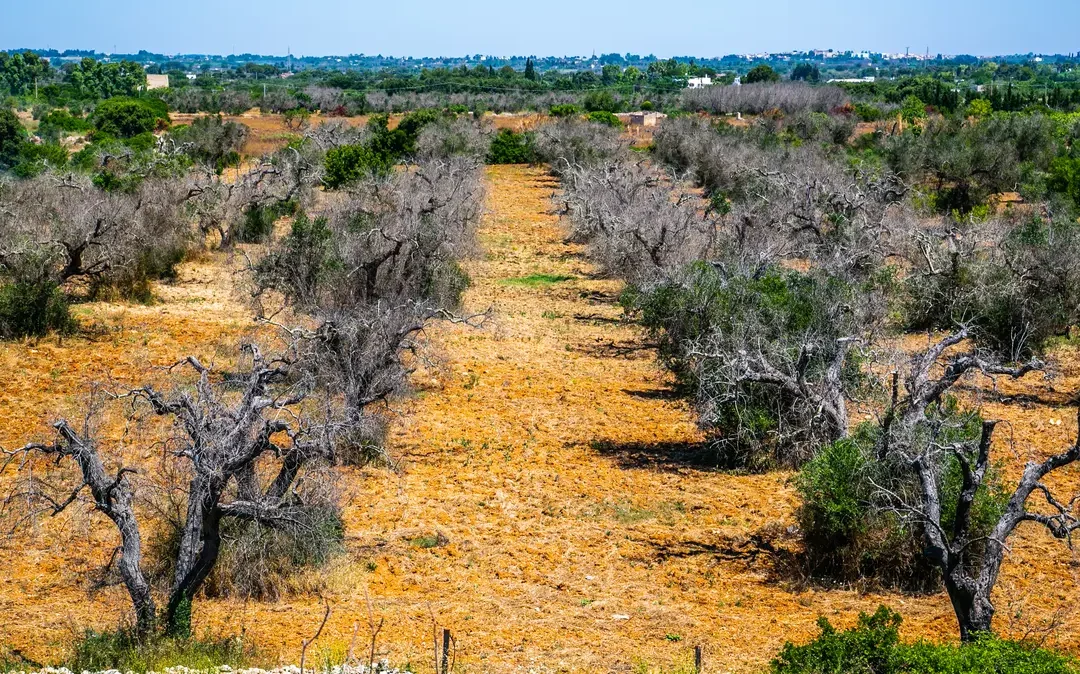
In almond orchards, there is removal of trees exhibiting almond leaf scorch (ALS) symptoms confirmed to be infected by Xylella fastidiosa in laboratory tests. Since the disease is spreading very slowly in almonds, we do not impose the radius removal of asymptomatic trees.
Is there any common feature with the infected plants in Lebanon?
Thus far, we do not know much about the Xf outbreak in Lebanon besides that it is likely subspecies fastidiosa. Hence, it is not easy to outline any similar feature. Nevertheless, due to the proximity of the infected areas in Israel and South Lebanon, they likely have similar characteristics, such as strain host range and insect vectors.
Are the Xf findings in the Mediterranean basin a reason for concern?
Yes, certainly. The climate in the Mediterranean basin, particularly in Israel and Lebanon, is estimated to be particularly fit for Xylella infection. On top of that, we must consider the significant cultural and economic value of plant species such as almond, grapevine, and olive trees for the region. Hence, the danger of further Xf-related diseases spreading to other areas and additional hosts is of great concern.