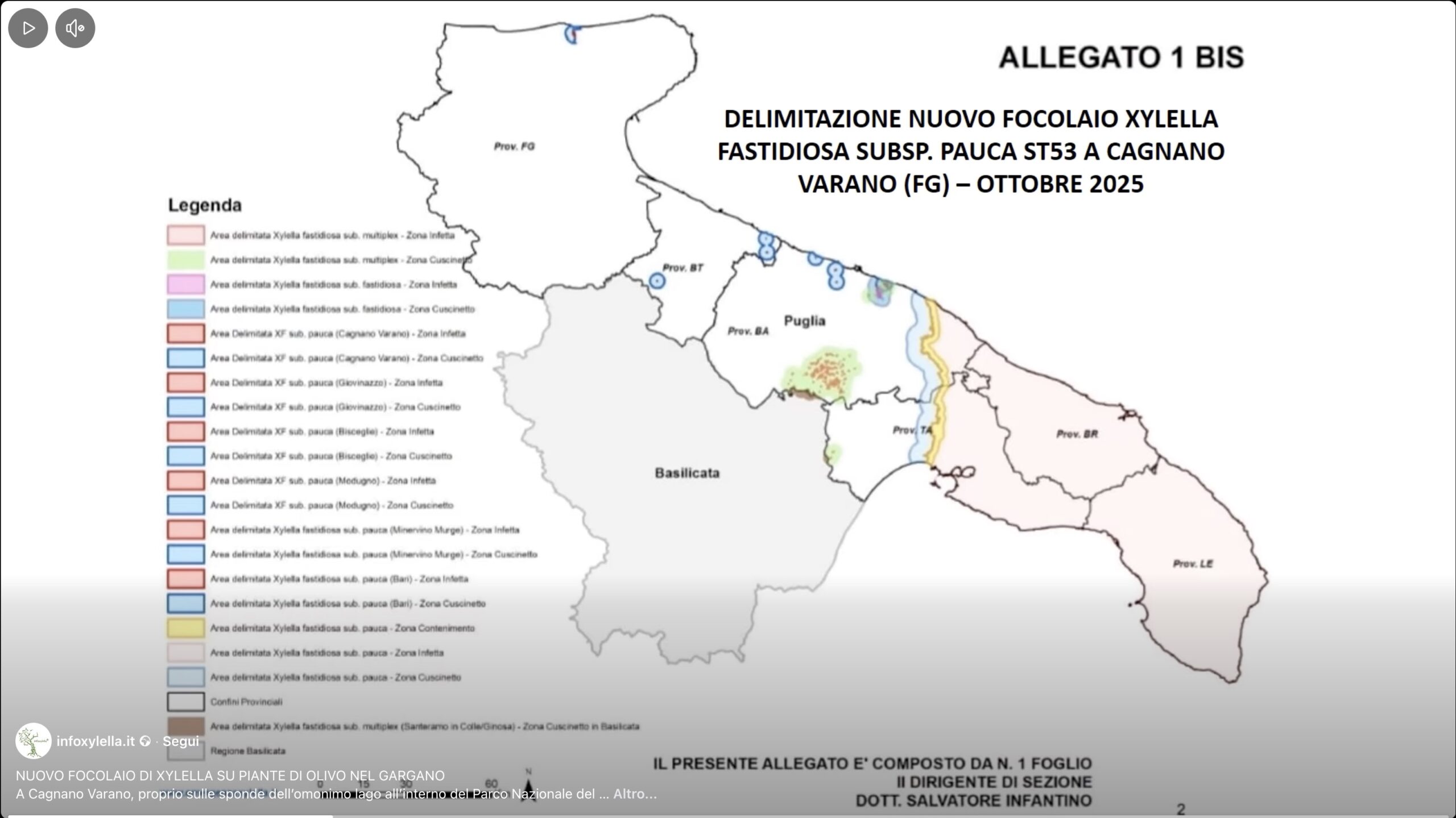
The Italian authorities have identified and verified a new outbreak of Xylella fastidiosa in Cagnano Varano, within the Gargano National Park, in Apulia. This is the northernmost point in the region since the bacterium was first detected 12 years ago.
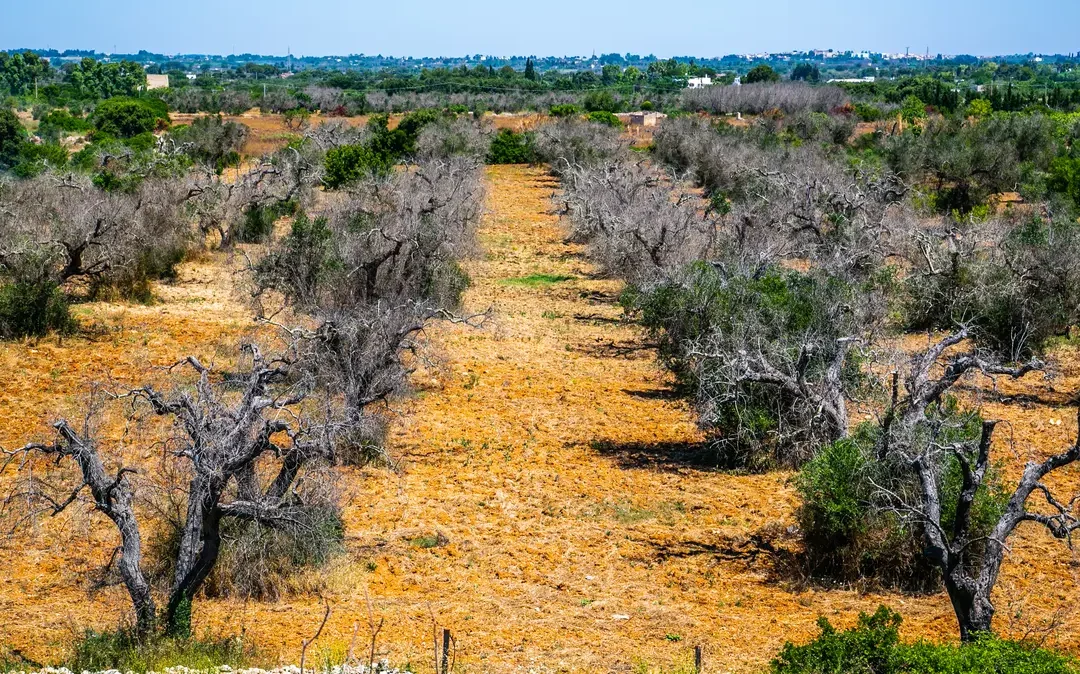
The outbreak consists of 47 large olive trees, and is caused by strains of the subsp. pauca ST53, which have previously devastated olive trees in three Salento provinces and has since then been reported in various locations in southern and northern Bari, the capital of Apulia. The outbreak is in an area far from major roads, which are known to facilitate the passive transport of infected vectors by motor vehicles.
The plants show very clear symptoms, which are visible in street view images dating back at least two years. This suggests that the outbreak has been present for a long time. It appears that its identification did not happen through regional monitoring, but through reports of suspicious symptoms to the phytosanitary authorities. If confirmed, this would demonstrate the importance of citizen-led information and active surveillance activities.