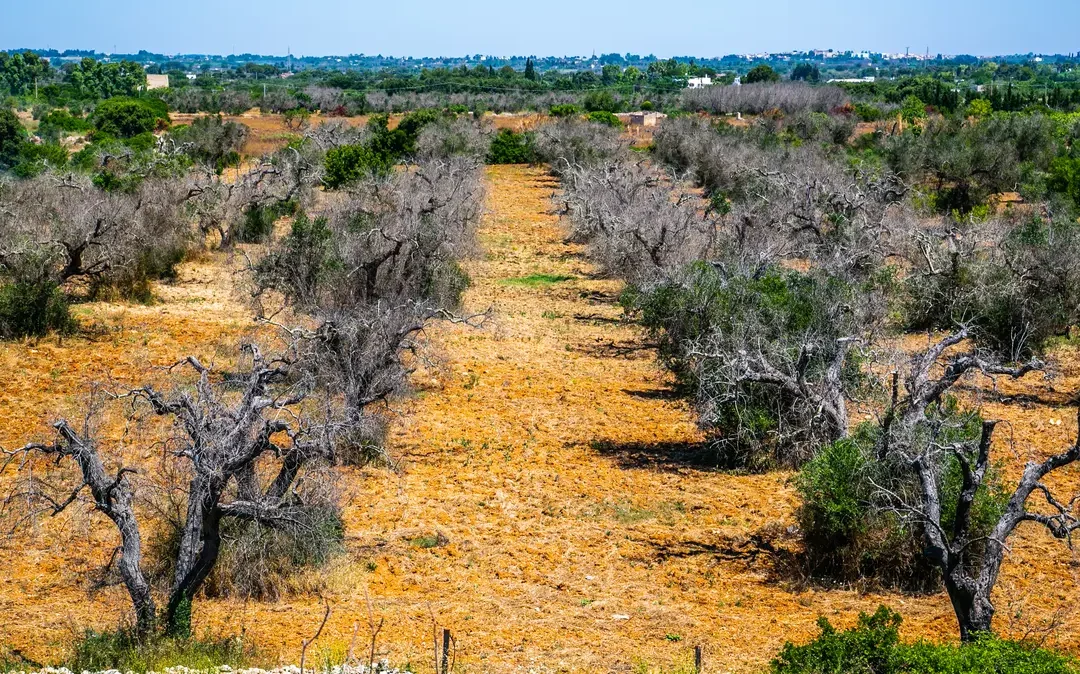

Nurseries are one of the sectors most affected by the consequences of Xylella fastidiosa outbreaks in Europe. EU measures to prevent the spread of the bacterium, in fact, include severe restrictions on the movement and trade of plants from the infected areas. As the President and Secretary General of the European Nurserystock Association (ENA), Henk Raaijmakers and Josep Pages, noted, an outbreak in one area can be “a major commercial disaster” for the entire sector in Europe. Thermal treatment is a well-known solution to ensure safe trade in plant material. However, approved protocols for Xylella only exist for vines. The BeXyl project researchers are investigating new thermal treatment protocols for planting and propagating material, with the specific aim of providing national authorities and the European nursery sector with new tools to ensure safe plant exchanges. We spoke with Pierferderico La Notte, researcher at the IPSP-CNR and leader of the BeXyl work package on thermal treatment.
What is the thermal treatment of plants?
It is a physical treatment carried out by exposing whole plants for planting or propagating material (buds, cuttings) to high or low temperatures, which can inactivate or eliminate potential pathogens and pests living inside or outside the tissues of the host plant species. Treatments may be carried out by immersion in water or exposure to steam or air under conditions of time and temperature compatible with the viability and reproductive capacity of the plant.
How can it contribute to safe plant trade?
In the case of quarantine pathogens such as Xylella fastidiosa, controlled treatment used in the nurseries during the multiplication processes or before the plants are sold on the market, can certify that the propagation material is safe and cannot move or spread the harmful organism to new areas. In other words, thermal treatment can provide the necessary health guarantees to ensure the safe movement of plant material for commercial or experimental purposes, thus facilitating plant trade between continents, countries, and territories.
What is currently known about the effectiveness of this method against Xylella fastidiosa?
The treatment of vine plants with hot water for 45 minutes at 50°C has been experimentally tested and officially recognised by the European plant health authorities as an effective preventive and curative tool against the bacterium. The same treatment is also accepted by the US authorities and is widely used by the nursery industry for Xylella fastidiosa on grapevines and pecan trees.

What is the aim of the BeXyl project?
BeXyl includes a specific work package to experimentally verify the effectiveness and safety of different types of thermal treatments and protocols adapted to the physiological characteristics of a larger number of both deciduous and evergreen host plants against all the different subspecies of the bacterium.
What steps will be taken to validate the new method?
The first step is to verify the bactericidal efficacy of different treatment protocols in infected plant tissues under artificial in vitro conditions and on a small scale. The second step is to document the degree of thermal tolerance of some important host plant species having different physiological characteristics. The third step of the process involves the validation of the most promising protocols through experimentation on a larger scale and at nursery level. Our goal is to have a new prevention tool and to extend the use of thermal treatments in the nursery of important woody crops, ornamentals and forestry.
When will the first results be available?
Although the flow of new information and data from the ongoing trials will continue throughout the project, at least for some representative perennial deciduous and evergreen species, we expect new draft standards for thermal treatments to be available towards the end of the project, in early 2026. Due to the large number of Xf host plants, their cultivars and other experimental variables, the preparation of a technical dossier analysing the potential use and applicability of thermal treatment therapy for Xf on plant propagating material on a commercial scale will lead to a continuation of the research activities beyond the project, extending it to other new host plants.