
Among the partners of the BeXyl Project, BIOVEXO plays an essential role in exploring possible solutions to mitigate the impact of Xylella fastidiosa outbreaks in the EU. BIOVEXO aims at finding effective “biocontrol” products against the pathogen and the vectors spreading it. Talking with Stéphane Compant from AIT (Austrian Institute of Technology GmbH) and Pasquale Saldarelli from IPSP-CNR (Institute for Plants Sustainable Protection of the Italian National Council of Research) helps us to have a better understanding of the contribution of pest biological control techniques and technologies for contrasting Xf.
What does “biocontrol” mean, and what are its tools?
We consider biocontrol or biological control as the exploitation of living agents to combat harmful organisms, pests, and pathogens, directly or indirectly, and mitigate their detrimental effects in agricultural settings or on plants.
Which are the most promising tools and approaches to treat Xf infections?
According to EFSA, no solutions are available to treat Xf infections currently. Prevention and the adoption of resistant cultivars – where identified – are the only existing solutions available. In BIOVEXO, we are developing preventive and curative solutions against Xf (X-biopesticides) and the insect vector Philaneus spumarius (V-biopesticides).
Could you describe the process for validating those treatments?
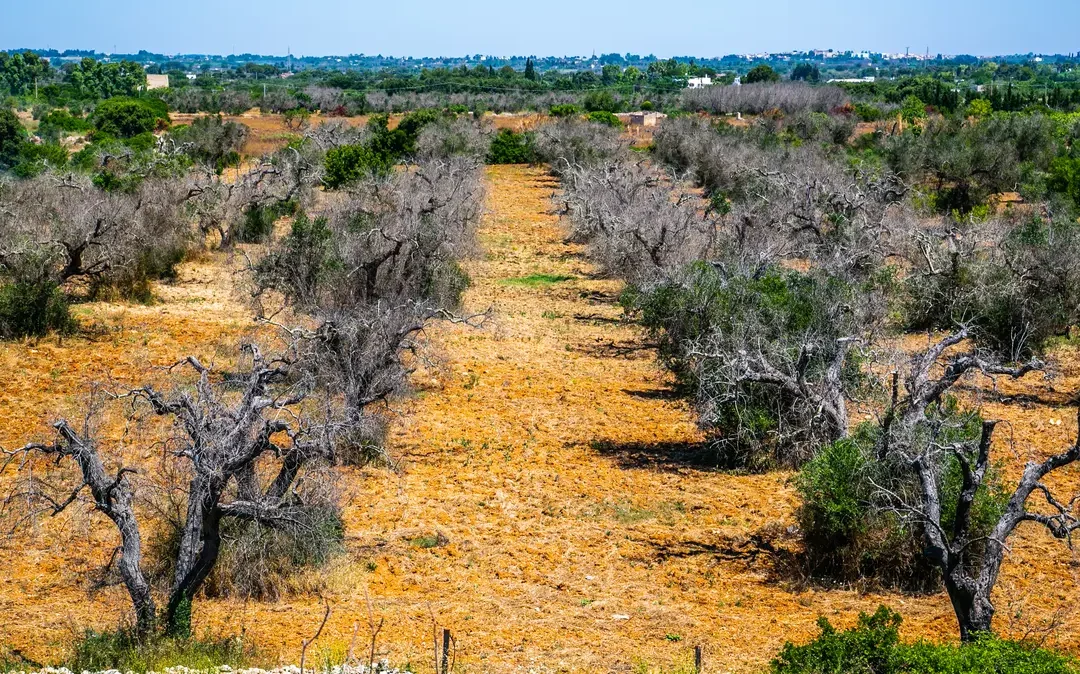
Field trials implemented in BIOVEXO involved several preventive and curative tests in Apulia, Italy, and in Alicante and Mallorca, Spain. In Apulia, olive varieties susceptible to the local isolate of Xylella fastidiosa (subspecies pauca ST53) are used in field trials to evaluate the efficacy of X- and V-biopesticides. Trials are carried out in different locations using newly planted or old infected plants, respectively for preventive and curative approaches, with products applied by spray, irrigation, or endotherapy.
Similar experiments are conducted on almonds in Alicante and Mallorca with almonds and olives. BIOVEXO started field trials on a small scale to select the best X- and V-biopesticides that are now under evaluation in large-scale field trials. In addition, an integrated containment strategy for Xylella infections, combining X- and V-biopesticides, has been designed, and it is under evaluation in field trials.
What are the results so far?
Small-scale field trials allowed to select X- and V-biopesticides able to mitigate Xylella fastidiosa infections or to reduce insect vector populations, respectively.
Parallel investigations have been carried out to comprehend the modes of action of X- and V-biopesticides on Xylella fastidiosa and olive plants. More in detail, microbiological studies assessed the antagonistic activity of X-biopesticides against Xf. An analysis of the transcriptome profile of greenhouse-grown plants estimated the olive response to X- and V-biopesticides. At the start of the Project X- and V-biopesticides were of TRL 4 or 5. “TRL” means “Technology Readiness Level” and it is a metric for assessing the degree of technological maturity of a product or process. It is based on a scale of 1 to 9, with 1 being the lowest (basic research) and 9 being the highest (early production). BIOVEXO is also performing studies to assess the products’ life cycle and toxicity, to facilitate their introduction in the market.